
Technical Background
Zonal isolation remains the defining benchmark for long-term wellbore integrity and environmental protection. During high-pressure, high-temperature (HPHT) well cementing, the integrity of the annular cement sheath is heavily dependent on precise slurry rheology, accurate thickening profiles, and stringent fluid loss management. Excessive filtrate invasion into permeable subterranean formations triggers localized dehydration, rapid slurry gelation, and incomplete cement displacement, exposing the casing to gas migration pathways and structural degradation.
Mechanisms of Advanced Fluid Loss Polymers
Conventional cellulosic additives exhibit structural degradation and rapid viscosity loss when bottomhole static temperatures (BHST) exceed 120°C. Modern engineered cementing additives utilize synthetic copolymers synthesized with AMPS (2-Acrylamido-2-Methylpropane Sulfonic Acid) and specialized hydrophilic monomers. These polymer chains demonstrate superior thermal stability, maintaining molecular configuration beyond 180°C. The polymer matrix forms a dense, low-permeability micro-filter cake at the mud-formation interface, restricting fluid loss to under 50 mL/30 min in strict adherence to API Recommended Practice 10B-2.
Laboratory Rheology and Slurry Compatibility
Formulating robust cementing slurries requires balanced interaction among dispersants, high-temperature retarders, and silica flour. In-depth laboratory testing utilizing HPHT consistometers and rotational viscometers confirms that advanced AMPS-based additives preserve pumpability without inducing unwanted secondary thickening or retarder over-extension. This rheological control ensures consistent placement across extended-reach and horizontal well trajectories.
Best Practices for Field Execution
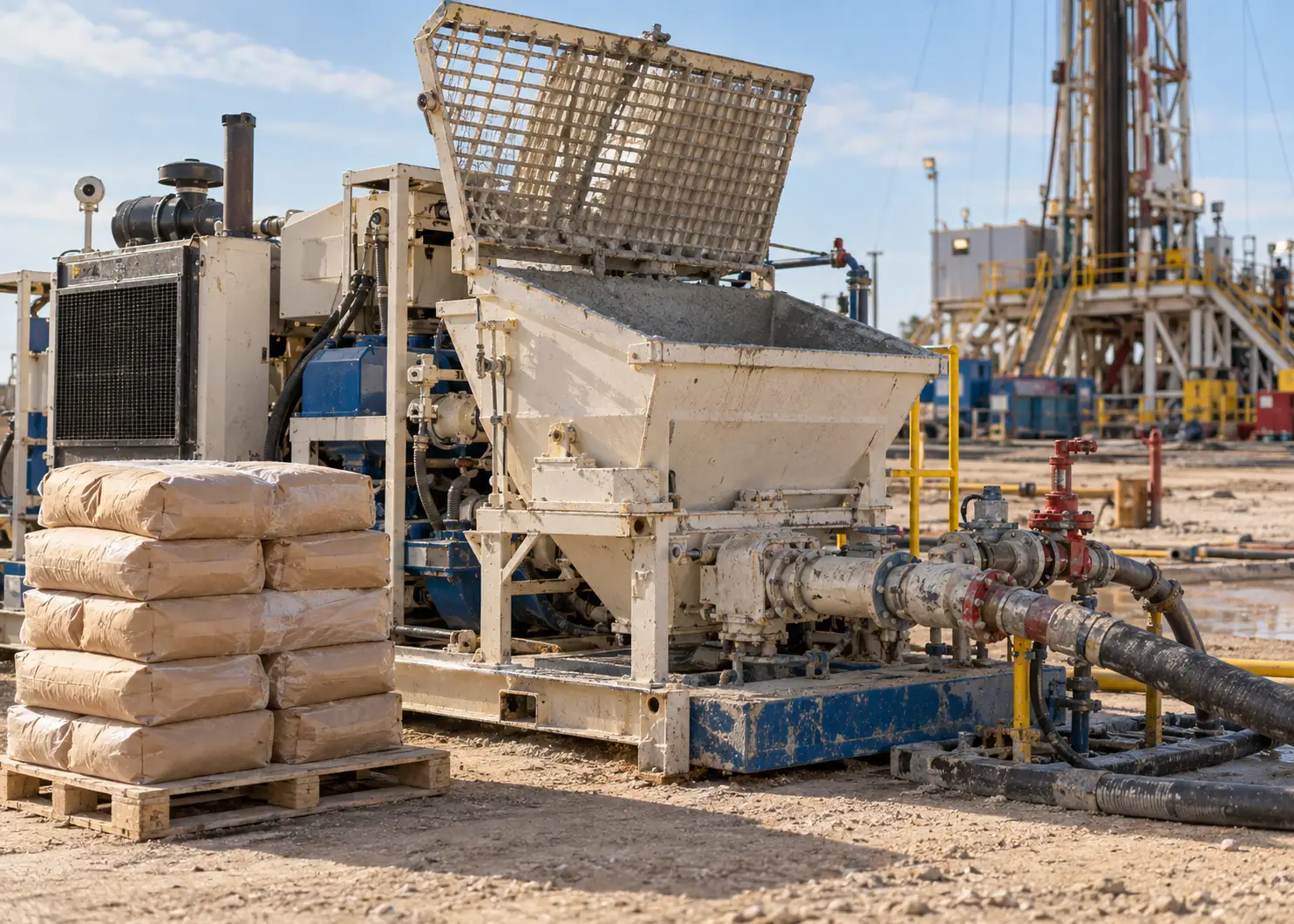
Successful field execution relies on thorough pre-job slurry hydration testing, batch-to-batch polymer consistency verification, and continuous density monitoring during pumping operations. Rigorous slurry qualification under simulated downhole pressures safeguards the well against annular gas leaks throughout the productive lifespan of the wellbore.